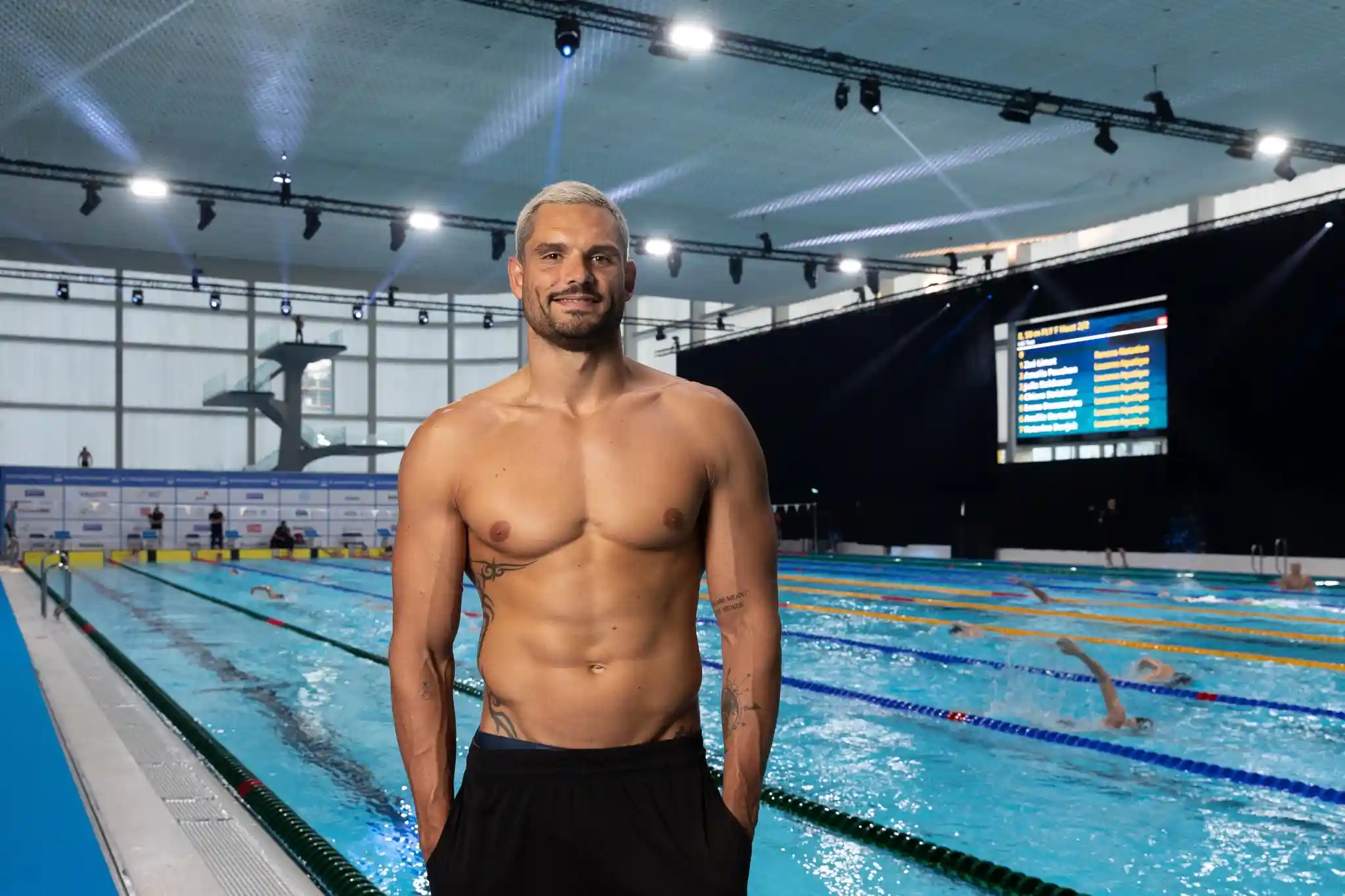
Florent Manaudou: Unpacking the Physique of a French Sprint Legend
Florent Manaudou has carved out an indelible legacy in the world of swimming, electrifying audiences with his explosive power and remarkable speed. Born on November 12, 1990, in Villeurbanne, France, Manaudou quickly rose through the ranks to become one of the sport's most dominant figures in sprint freestyle and butterfly. His journey, closely watched by fans and experts alike, saw him follow in the illustrious footsteps of his elder sister, Olympic champion Laure Manaudou, yet forge a unique path defined by unprecedented individual and relay triumphs.
From his surprising Olympic gold in the 50m freestyle at the 2012 London Games, where he out-touched established titans like Cullen Jones and César Cielo, to his multi-medal hauls at European and World Championships, Manaudou’s career is a testament to raw talent honed by relentless dedication. But beyond the medals and records, a significant part of his success lies in his exceptional physical attributes. Understanding Florent Manaudou's physical dimensions—specifically his height and weight—offers critical insight into how he generates such formidable propulsion and maintains peak performance in the intensely competitive world of elite swimming.
Florent Manaudou's Physical Profile: Height, Weight, and What They Mean
In a sport where fractions of a second decide victory, an athlete's physical build is not just an advantage; it's often a prerequisite for dominance, particularly in sprint events. For Florent Manaudou, his stature and build are perfectly adapted for his specialty. Standing approximately 1.92 meters (6 feet 3 inches) tall, Manaudou possesses an impressive reach and leverage that are invaluable for maximizing each stroke in the water. This height provides a longer "lever arm" for propulsion, allowing him to cover more distance with fewer strokes, a crucial factor in the fast-paced 50m and 100m races.
When it comes to Florent Manaudou Poids (weight), he typically competes around 100 kilograms (approximately 220 pounds). This substantial mass, primarily composed of lean muscle, is exceptionally significant for a sprint swimmer. While endurance swimmers might prioritize a leaner build for buoyancy and less drag over long distances, sprinters like Manaudou leverage their sheer power. His weight, combined with his height, contributes to a robust and powerful frame that can generate immense force off the starting blocks, through turns, and during the critical underwater phases. It also provides the necessary stability and force to hold speed through the water despite the incredible resistance. This combination of height and weight creates a formidable presence in the pool, turning his body into a highly efficient machine designed for explosive speed.
The Powerhouse Physique: How Manaudou's Build Translates to Speed
Florent Manaudou's physique is a masterclass in biomechanical efficiency tailored for aquatic speed. His broad shoulders, frequently noted as a key characteristic by commentators ("épaules assez larges" – broad shoulders), are not merely aesthetic; they are central to his power. These wide shoulders allow for a greater sweep of the arms through the water, effectively increasing the 'paddle' surface area and generating more propulsive force with each stroke. Coupled with powerful lats and pectoral muscles, this creates an engine capable of moving massive amounts of water.
Below the surface, Manaudou's powerful legs and glutes are equally crucial. His explosive starts, which often see him burst ahead of the competition, are a direct result of immense leg strength. Furthermore, his powerful kick contributes significantly to maintaining momentum, especially in the final meters of a race when fatigue begins to set in. The core strength that ties his upper and lower body together ensures that all this power is transmitted efficiently, preventing energy wastage through unnecessary body rotation or instability. His meticulous attention to detail ("amoureux du détail") extends to perfecting every aspect of his technique, ensuring that his powerful build is channeled into the most effective and streamlined movement possible. This dedication led to astounding performances, including world records in the 50m freestyle (20.26s) and 50m backstroke (22.22s) during the 2014 World Short Course Championships in Doha, clear indicators of how effectively his physique translates into record-breaking speed.
A Career Forged in Gold: Major Achievements and Physical Demands
Manaudou's career is decorated with an impressive array of international titles, demonstrating not only his talent but also the incredible physical resilience required to compete at the highest level. His unexpected Olympic gold in 2012 was just the beginning. The following years saw him solidify his position as a global swimming force. In 2013, he clinched a World Championship gold in the 4x100m freestyle relay in Barcelona, showcasing his team spirit and individual prowess. The year 2014 was particularly spectacular, dubbed a "semaine en or massif" (week of solid gold) in Berlin, where he swept four European Championship gold medals in the 50m and 100m freestyle, 50m butterfly, and the 4x100m freestyle relay. Later that year, at the World Short Course Championships in Doha, he became the most decorated French swimmer in World Championship history, securing six medals and setting two world records.
These intense periods of competition demand an extraordinary physical toll. Participating in multiple events across several days, often with heats, semi-finals, and finals, requires not just raw speed but also incredible endurance, recovery capabilities, and mental fortitude. As noted during his Berlin triumph, Manaudou was initially "agacé par des petits détails" (annoyed by small details) related to the pool, highlighting the immense pressure and high standards he places on himself. Yet, his ability to overcome initial apprehensions and perform at such an elite level underscores his robust physical and mental preparation. His powerful body, honed through years of training, allows him to absorb the immense physical stress, recover quickly, and consistently deliver peak performances under immense pressure ("Gérer la pression"). To delve deeper into his competitive journey and vital statistics, explore Florent Manaudou: Career Highlights & Personal Measurements.
Training & Maintaining an Elite Swimmer's Body
Maintaining a physique like Florent Manaudou's, especially one optimized for sprint swimming, involves a rigorous and multifaceted training regimen. It's not simply about splashing in the pool; it's a scientific approach to athletic development.
- Intense Pool Sessions: Manaudou's training involves high-intensity, short-duration sprint work to develop maximum speed and power. This includes drills focused on explosive starts, powerful turns, and efficient underwater dolphin kicks, which are crucial for generating an early lead in sprint races.
- Dry-Land Strength and Power Training: A significant portion of a sprinter's power comes from dry-land training. This typically includes heavy compound lifts like squats, deadlifts, and bench presses to build raw strength, as well as plyometric exercises (box jumps, medicine ball throws) to enhance explosive power. Core strength exercises are paramount for stability and efficient power transfer.
- Flexibility and Mobility: While strength is key, flexibility is vital for a wide range of motion in the shoulders and hips, which translates to longer, more efficient strokes and kicks without risking injury.
- Nutrition and Hydration: Fueling such an athletic body is critical. A high-protein diet for muscle repair and growth, complex carbohydrates for energy, and healthy fats are essential. Hydration is also continuously monitored to ensure optimal physiological function. The emphasis on quality nutrition ensures that Florent Manaudou Poids remains optimal for performance, often cycling between slightly heavier during strength phases and leaner during peak competition.
- Rest and Recovery: Perhaps as important as the training itself, adequate rest, sleep, and recovery strategies (massage, cryotherapy, active recovery) are crucial for muscle repair, preventing overtraining, and maintaining peak physical condition. Manaudou's meticulous nature extends to his recovery, understanding that consistency and detail in this area are non-negotiable for sustained success.
Aspiring swimmers can learn from Manaudou's dedication by embracing a holistic approach to training. Focus not only on time in the water but also on complementary dry-land work, intelligent nutrition, and prioritizing rest. Developing attention to detail in every aspect of training, just as Manaudou does, can unlock significant improvements.
Conclusion
Florent Manaudou stands as a towering figure in the annals of swimming, his name synonymous with explosive speed and unparalleled sprint prowess. His journey from a promising talent to an Olympic and multiple World Champion is a testament to extraordinary dedication and a profound understanding of his craft. Crucially, his physical attributes—his commanding height of approximately 1.92 meters and his powerful competitive weight of around 100 kilograms—are not just numbers but the very bedrock of his success. This perfectly sculpted physique, honed through relentless training and a meticulous approach to every detail, allows him to slice through the water with unmatched power and efficiency. As we reflect on his golden career, it becomes clear that Florent Manaudou's Poids and overall physical mastery are not merely statistics; they are integral components of the legend he has become, inspiring a generation of swimmers to push the boundaries of what's possible in the pool.